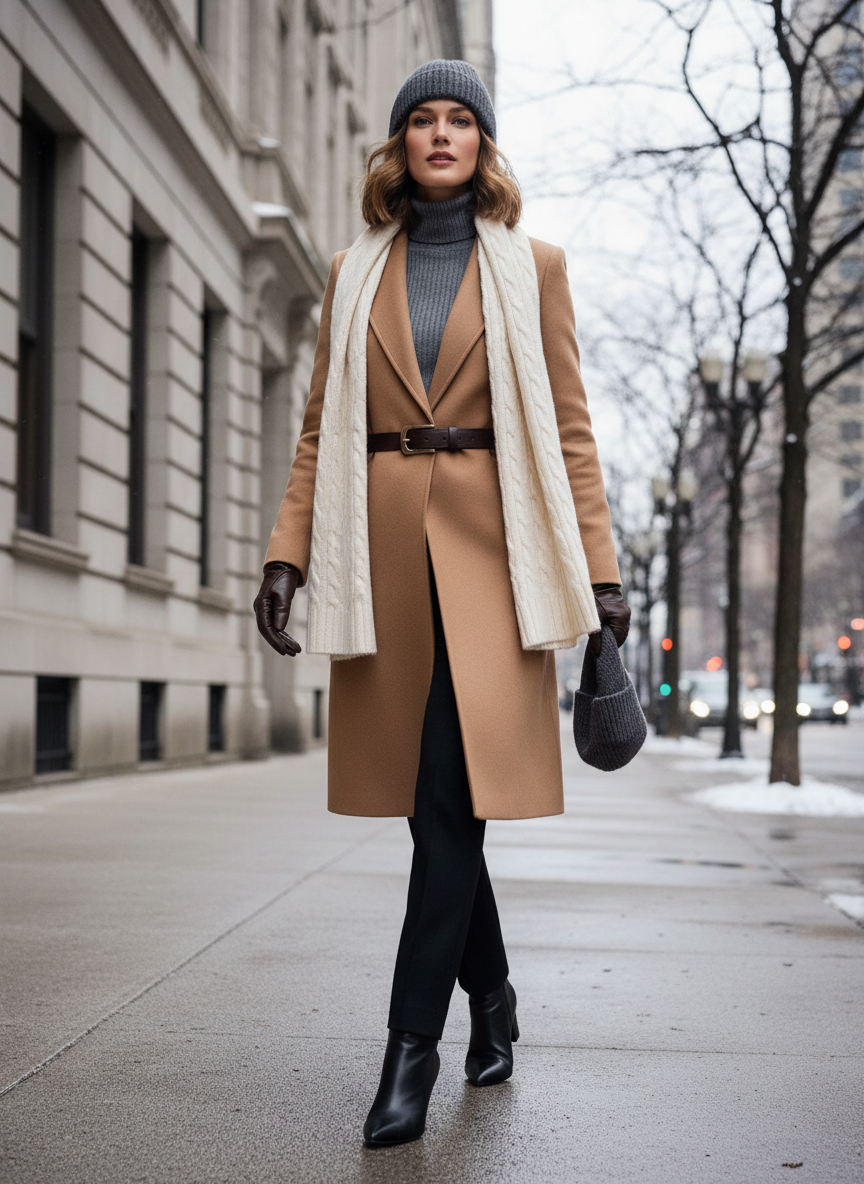
A Chicago winter demands a particular artistry. The city’s unforgiving climate—those relentless wind corridors that tunnel down Michigan Avenue, the capricious flurries that ambush you en route to dinner in the West Loop—requires a methodology that transcends mere bundling. To navigate these months with grace is to master an intricate vocabulary of layering, one that produces silhouettes that are at once impeccably insulated and visibly curated. This is your guide to moving through the season not simply warm, but undeniably elegant.
The Foundation: Begin with Refined Basics
The base layer serves as the invisible infrastructure of a polished winter wardrobe. Invest in lightweight thermal pieces—merino wool, heat-tech fabrics—in a restrained palette of black, charcoal, and muted olive. These pieces should embrace the body without constraint, creating an undetectable foundation that permits outer layers to skim elegantly over the form. The aspiration is thermal efficacy without bulk, allowing you to shed successive layers as you transition from the rigid cold of Michigan Avenue into the warm embrace of a River North restaurant, your silhouette remaining intentional at each stage.
The Middle Layer: Knitwear as Sartorial Statement
A worthy sweater is distinguished not by its thickness, but by its architectural integrity. Seek out pieces with refined proportions and elevated textures: a slim, ribbed turtleneck beneath a tailored blazer; a cashmere crewneck layered with a whisper-thin silk camisole; a gracefully oversized funnel-neck that plays against a fitted base. Maintain a cohesive chromatic narrative—camel, soft gray, winter white, deep forest green—permitting pieces to compose effortlessly into a unified visual narrative.
Presence Through Proportion: The Structural Mid-Layer
Once you move indoors, the mid-layer becomes your outfit’s principal statement. A wool-blend blazer, a precisely cut jacket, or a lengthened vest immediately elevates knitwear from incidental to intentional. Layer a tartan blazer over a refined turtleneck for downtown boardrooms, or a leather-trimmed jacket over a minimal sweater for evenings in Wicker Park. Strategic structure ensures that when you release your coat, the ensemble beneath commands complete attention.
The Outerwear Hero: A Long Coat as Investment
A knee-length or floor-grazing wool coat is fundamental. Seek a silhouette with precise tailoring, sufficient volume for layering, and either a defined waistline or a leather belt—this prevents the wearer from disappearing entirely beneath fabric. Camel and deep navy are eternally sophisticated; espresso brown conveys understated luxury. While black remains the ultimate neutral, soften its severity during the gray months with richly textured scarves and refined knitwear. This singular coat becomes your credential, equally at home over gym attire, office wear, or dinner silhouettes.
Thermal Excellence: The Lightweight Down Layer
For those particularly austere days when the lake’s influence renders single digits inevitable, consider a minimalist down jacket or vest—choose one with a narrow, precise quilting pattern that contributes volume without visual bulk. A down vest layered beneath a wrap coat maintains core warmth while preserving the silhouette’s refined proportions. Upon entering heated interiors, the piece stows discreetly into your tote, remaining available but invisible.
Textural Sophistication: The Language of Contrast
Texture functions as the syntax of elevated winter dressing. Juxtapose a supple cashmere sweater with a precisely starched cotton shirt; pair a brushed wool coat with a sleek leather tote; layer a structured bouclé scarf over smooth tailoring. These deliberate contrasts signal intentionality and perceived luxury, transforming modest individual pieces into a coherent narrative. On the Red Line platform, texture is what distinguishes the composed from the merely bundled.
Chromatic Strategy: Building a Seasonal Palette
A disciplined color story is foundational to seamless layering. Consider, for instance: black, cream, camel, and sage; or charcoal, warm taupe, ivory, and wine. This restricted palette permits multiple pieces to accumulate without visual discord. Introduce color thoughtfully through accessories: a pale pink cashmere beanie, a deep emerald scarf, or vivid scarlet gloves—these touches provide sophisticated restraint against a neutral foundation.
The Scarf as Sculptural Element
A scarf transcends functionality to become an instrument of proportion and refinement. Oversized blanket scarves serve the windiest lakeside passages with appropriate drama, yet for quotidian city navigation, a long, slender wool or cashmere wrap permits elegant draping. Position it beneath your coat’s lapels for a lengthening effect, or permit a subtle peek of color to emerge from beneath tailoring. Indoors, a narrower scarf transitions seamlessly from insulation to accessory, remaining chic rather than cumbersome.
Extremities: Gloves and Hand Protection as Detail
Even the most meticulously composed ensemble falters when hands emerge raw and reddened. Invest in leather or leather-trimmed gloves lined with insulating materials that permit continued tactile access to your phone. For temperatures that dip toward the severe, layer a delicate cashmere or heat-tech glove beneath a roomier leather pair, permitting strategic removal as indoor warmth accumulates—you achieve doubled insulation without visible excess.
Crowning the Silhouette: Hat Selection with Purpose
In a city subjected to relentless wind, a hat is far more than an afterthought. Choose silhouettes that calibrate your proportions: a refined beanie with a puffer jacket; a structured felt fedora or broad-brimmed hat with an extended wool coat; a precisely folded cashmere beanie with tailored camel tailoring. Remain within your chromatic vocabulary—the hat should feel architectural rather than expedient.
Lower Half Strategy: Elegant Leg Coverage
This is where most wardrobes capitulate to utilitarian excess. Instead, employ a more refined approach: layer thin thermal leggings beneath tailored trousers or structured denim with stretch. For skirts and dresses, combine opaque tights with appropriate insulation and knee-high or over-the-knee boots. A midi-length knit dress paired with substantial tights and elongated boots, all unified beneath a structured coat, produces a silhouette of quiet authority suitable from the Loop to Logan Square.
Footwear: Where Practicality Meets Polish
Chicago’s winter slush presents an unforgiving test of footwear. Seek boots that are waterproof, insulated, and unmistakably refined: a sleek Chelsea boot with substantial sole, a heeled lug-boot, or a knee-high style amenable to both denim and skirts. Maintain a pair of more formal shoes at your office for post-work engagements. Select fine wool socks that provide warmth without the bulkiness that compromises the boot’s silhouette.
Shape and Definition: The Strategic Belt
Multiple layers risk a volumetric silhouette that obscures rather than reveals. Deploy belts with surgical precision: cinch a sweater dress at the waist before donning your coat; define the torso with a belt over a blazer worn with a turtleneck; permit the tie-belt of a wrap coat to emphasize your proportions. When you remove your outerwear at a Fulton Market dinner, the silhouette beneath remains deliberately sculpted, never merely practical.
Transition Mastery: The Art of Indoor-Outdoor Dressing
Chicago’s rhythm demands constant sartorial negotiation: glacial sidewalks, overheated vehicle interiors, warmly appointed wine bars. Architect your layering with removal in mind. Your foundational and intermediate layers must be sufficiently refined to stand alone, while your highest-insulation pieces—scarves, hats, gloves, down vests—demand easy stowability. Eschew oversized, chunky sweaters beneath coats in favor of a succession of thinner, more elegant pieces that permit strategic subtraction without leaving you underdressed.
The Uniform Approach: A Personal Winter Formula
The most elegant solution to winter dressing is the cultivation of two or three foundational formulas that reduce decision-making on mornings when predawn darkness and ice-laden sidewalks test one’s resolve. Perhaps: a camel coat with black turtleneck, tailored trousers, and ankle boots; or a wool wrap coat with a midi knit dress, opaque tights, and tall boots. Within this framework, rotate textures and smaller accessories with intention. A beautiful glove, a richly colored scarf, or a precisely angled beanie becomes the vehicle for individual expression. Master your silhouettes, and the details—those small instruments of refinement—will elevate you into that rare category: the composed woman on the platform, unmistakably herself yet entirely at ease within Chicago’s winter landscape.