
Why Y2K Mall Trips Felt Like the Internet Before the Internet
If you ever spent a Saturday in the late ’90s or early 2000s wandering a mall with a pretzel in one hand and a stack of glossy shopping bags in the other, congratulations: you basically experienced the internet before it moved onto a screen. The Y2K mall was our original online platform — a living, breathing feed of trends, drama, noise, and neon crop tops. We just called it “going to the mall.”
For Aisha’s Fashion Faves, I wanted to revisit that era when getting dropped off at the main entrance felt like logging in, and leaving right before closing time felt like your Wi‑Fi finally giving up. The more you think about it, the more obvious it becomes: shopping at the mall around Y2K was a low-tech, high-sensory version of the internet we know now — especially for anyone who lived for a good outfit and a better bargain.
Browsing Racks Was Our First Version of Scrolling
Today we scroll. Back then, we sifted. Fingers sliding hangers one by one along an overstuffed rack was the original infinite scroll, just with more static cling. Instead of your thumb flicking through a never-ending timeline, your hand pushed through rows of baby tees, cargo pants, and questionable synthetic knits, waiting for something to interrupt the flow.
Every metallic halter top and rhinestone-studded logo hoodie that caught your eye was like a post that made you stop mid-scroll. You’d pause, pull it out, hold it up, and ask the ultimate Y2K question: “Is this cute, or is this too much?” (It was usually both, and that was the point.)
There was an algorithm of sorts, but it lived in your brain: the mental filters of budget, dress code, and how much courage you had that year. Cropped too high? Scroll on. Low-rise too low? Definitely scroll on. But every once in a while, you’d spot The Piece — maybe a silver puffer jacket or a pair of flared jeans with embroidered back pockets — and everything else on the rack just blurred into background noise. Instant like. Instant save-to-cart (also known as draping it over your arm until it left a red mark).
Window Displays Were Our Visual Feeds
Before curated grids and aesthetic feeds, there were storefront windows — glowing, backlit portals into perfectly styled outfits we were determined to recreate for less. Each display was like a profile page for that store: you knew exactly what vibe they were serving from ten steps away.
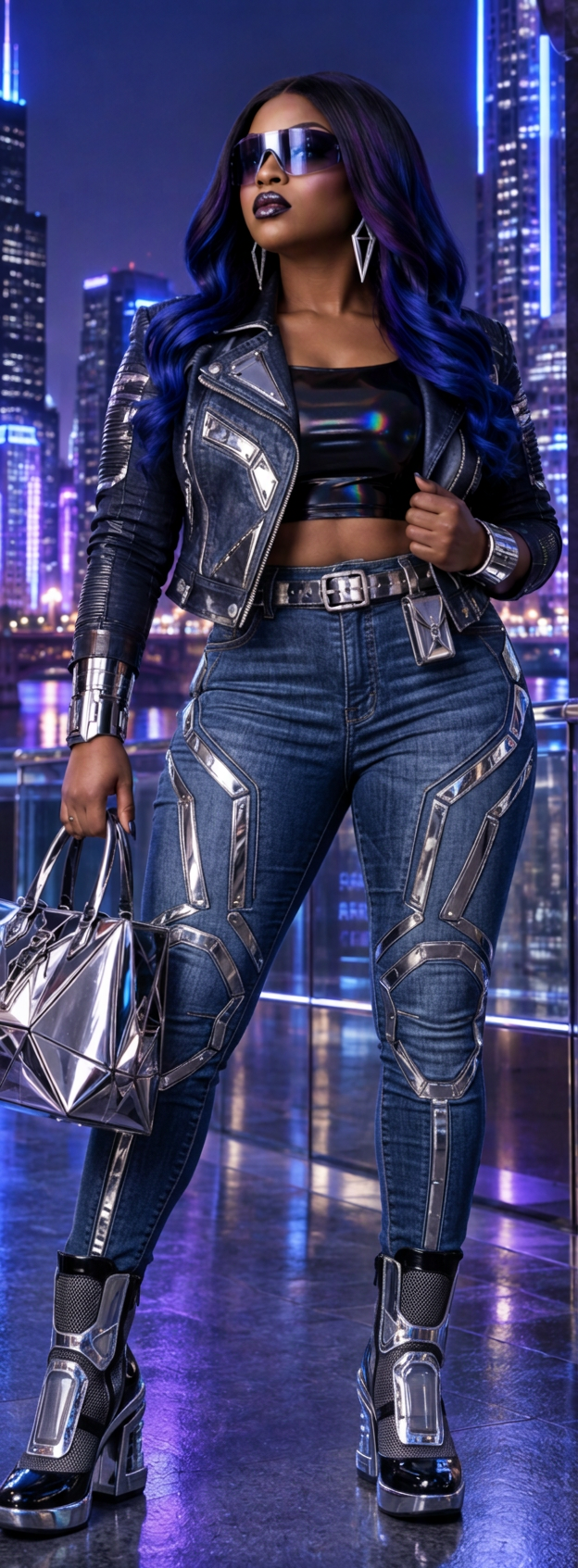
There were the minimalist brands with mannequins in carefully layered neutrals, looking like they lived inside a beige desktop background. Then there were the maximalist chains where everything sparkled, from the sequined tube tops to the disco-ball earrings. Walking the length of the mall was like scrolling through an IRL Explore page: grunge at one window, preppy at the next, futuristic metallics around the corner.
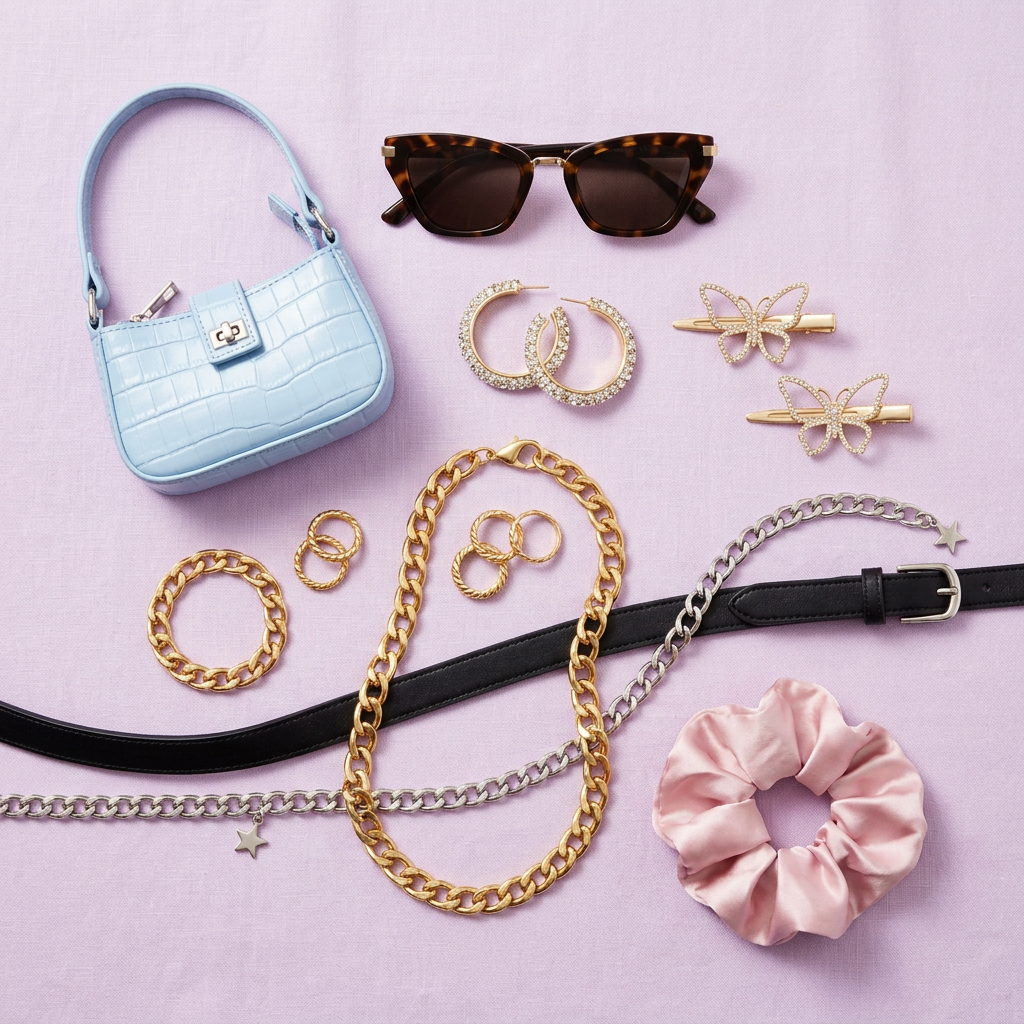
And the color stories! Y2K windows loved a theme. One month it was head-to-toe denim, the next an explosion of bubblegum pink and glitter. Mannequins posed with tiny baguette bags and platform sandals, promising that if you just stepped inside, you too could emerge looking like you belonged in a music video playing on a boxy TV somewhere in the back.
Where we now pause on an image that inspires us, back then we’d literally stop in our tracks, press closer to the glass, and silently (or not so silently) screenshot it with our eyes. That was mood boarding: memorizing exactly how they cuffed the jeans or layered the tank under the shrug so you could try to duplicate it at home.
Store Playlists Were the Original Curated Content
If you’ve ever walked into a store, heard a song, and instantly been transported back to the smell of mall pretzels and body spray, you already know: the Y2K mall had a soundtrack, and it was relentless in the best way.
Every shop had its own sonic brand. One store blasted boy bands and pop princesses so loudly you could practically feel the bass in your ribcage. Another leaned into moody alt-rock and whispered that you, too, were misunderstood and should probably buy that graphic tee. It was curation before playlists had usernames.
Instead of a “For You” page, you had a “For Our Customers” CD playing on loop. The music told you who this store thought you were, or at least who you might become after a fitting-room transformation. You didn’t just browse clothes; you absorbed a whole aesthetic through speakers mounted in the ceiling.
And just like discovering a new favorite creator or channel online today, there was a thrill in hearing a track you didn’t recognize. You might not have had Shazam, but you had a brave friend willing to lean over the counter and ask, “Um, sorry, what CD are you playing?” That was content discovery, Y2K style.
Catalogs and Magazines Were Our Recommendation Engines
Before an algorithm decided which coats and boots to show you, we had two trusted sources: catalogs in the mail and fashion magazines stacked by the couch. They were our pre-digital recommendation systems, circling trends in glossy ink instead of data.
Those thick seasonal catalogs from your favorite mall brands were essentially curated shopping lists. Each page was a themed collection: “Weekend Chill,” “Night Out,” “Back to Whatever You Were Doing Before.” The pages paired pieces for you, recommending that if you loved this one cargo skirt, you obviously needed the matching zip-front vest and color-coordinated bucket hat.
Magazines did their own version of this. You’d pore over editorials filled with shiny lips, frosted eyeshadow, and outfits that may or may not have involved three layers of tops for no practical reason. Margins would be filled with scribbled notes: “Need this,” “DIY that,” or sometimes just a series of exclamation marks next to a pair of pants that dragged on the floor just so.
Then you’d take those mental “recommendations” to the mall as a shopping checklist. Searching for something “like that top from page 46” was the Y2K version of clicking on a product link from a style roundup. The difference? You had to physically walk between stores, armed only with your memory and maybe a ripped-out page folded in your bag like a secret mission.
Trying Things On Was Our Way of Sharing Discoveries
Today we send mirror selfies from fitting rooms, post hauls, and ask group chats, “Keep or return?” Back in the Y2K mall era, this happened in real time, face to face, under the harshest fluorescent lighting known to humankind.
The fitting room hallway was its own social network. You’d emerge from behind the curtain in a glittery top or dangerously low-rise jeans and wait for your friends’ reactions. That collective gasp — whether it was horror or delight — was the equivalent of a comment section. No filters, no retakes, just pure immediate feedback.
Discovering something that worked perfectly felt like unlocking a new level. One person would try on a dress “just for fun,” and suddenly everyone in the group needed to see if it was secretly their dress, too. The item made the rounds, like a link going viral but with more shoelace tripping and hanger clanking.
And when you found that iconic piece — the sparkly going-out top, the jacket that somehow looked good over every outfit, the boots that made you feel three inches taller and ten times bolder — you didn’t need to post it to prove it existed. You wore it to the next birthday dinner, movie night, or family gathering, and that was your “share” button.
The Mall as a Portal, Not Just a Place
Under the soft hum of escalators and the glow of neon signs, the Y2K mall wasn’t just where we shopped. It was where we experimented with who we might become. Fashion was the interface, and each store was like a different tab you could open, explore, and then close when it stopped speaking to you.
For those of us who remember it, there’s a kind of sweetness in realizing how analog everything was. No online reviews, no tracking numbers, no “only three left in stock.” Just your instincts, your friends’ reactions, a wallet full of crumpled receipts, and maybe a keychain from the accessories store you couldn’t resist on the way out.
Today, we can tap and swipe our way to a fully built wardrobe without leaving the couch, and there’s a lot to love about that convenience. But every now and then, it’s worth honoring the earlier version of our fashion lives — the era when exploring style meant leaving the house, meeting under the big central skylight, and letting your feet (and your curiosity) decide which direction to wander.
So the next time you find yourself mindlessly scrolling a product carousel, think back to the smooth slide of plastic hangers, the weight of a new purchase swinging from your wrist, the way a song drifting out of a storefront could change your whole mood. The Y2K mall may not have had Wi‑Fi, but for fashion lovers, it was already a kind of internet: immersive, chaotic, personal, and full of possibilities you could quite literally try on for size.

Drop your two cents 🪙