
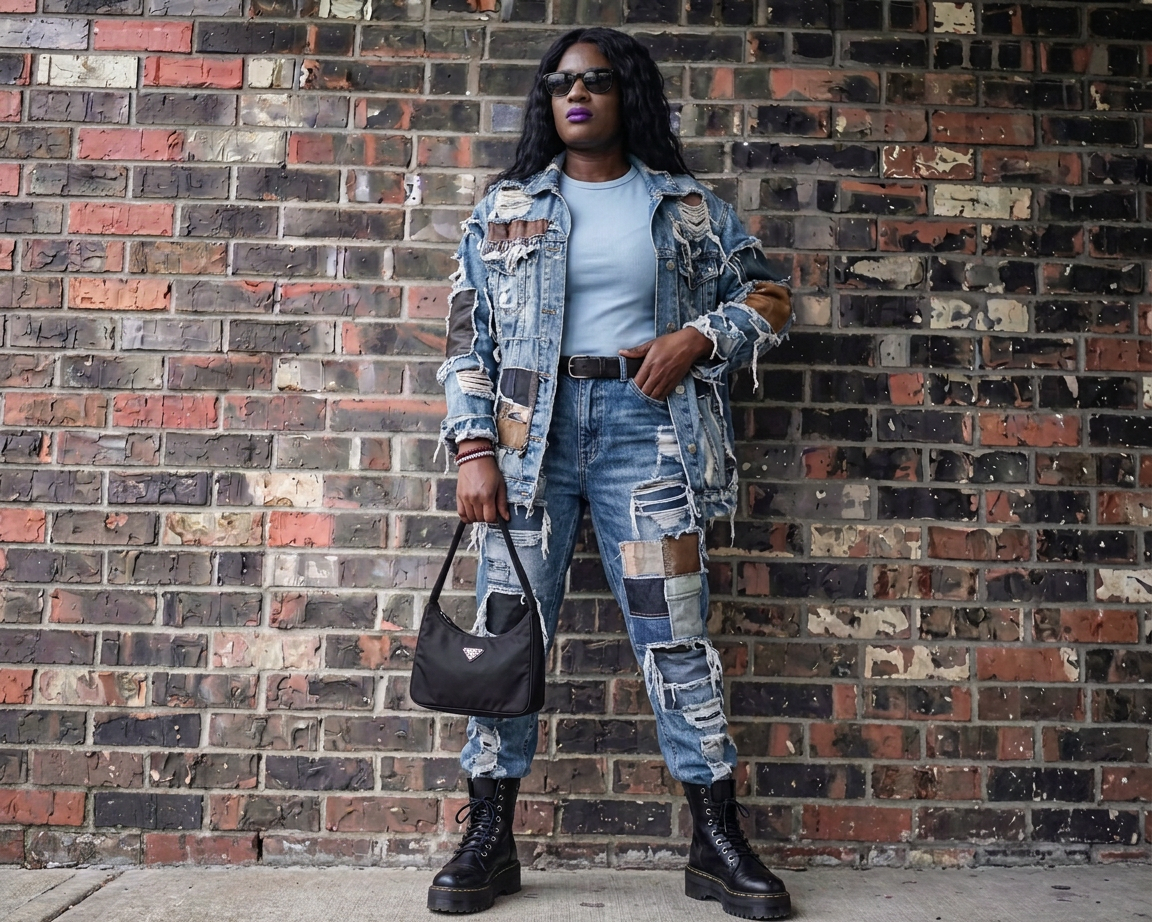
If you were a teenager in the early ’90s, you already know that denim was everything. Not just any denim — the right denim. The kind that said something about you before you even opened your mouth. Back when I was navigating the hallways of high school, two brands had completely taken over my world: USED and Damaged. These weren’t just jeans. They were a statement, a lifestyle, a whole vibe before we even had the word “vibe.” I’m Aisha, and this is my story about chasing down the most coveted denim of the early ’90s — and what it felt like when I finally got my hands on it.
What Made USED and Damaged So Special
Let me set the scene for you. It’s 1991. Hip hop is reshaping everything — the music, the slang, the fashion. Street style isn’t a trend yet; it’s just how people actually dress. And in the middle of all of that, USED and Damaged denim show up and completely change the game. These brands understood something that other denim companies were slow to catch onto: teenagers didn’t want pristine, polished jeans. We wanted denim that looked like it had lived. Denim with character. Denim that looked like it belonged to someone cool.
USED jeans had this incredible faded, worn-in quality that felt effortlessly authentic. The washes ranged from a pale, almost white stonewash to a soft, chalky medium blue — the kind of blue that looked like the jeans had been through a hundred summers. The fabric had a softness to it that you couldn’t fake. Frayed hems, slightly distressed knees, and a relaxed fit that sat just right on your hips. Damaged took things a step further. Their jeans had actual rips and patches — deliberate, artful destruction that made each pair feel one-of-a-kind. We’re talking frayed slashes across the thighs, raw-edged tears, and sometimes embroidered or contrast-stitched patches that added a whole extra layer of personality. Both brands offered denim jackets to match, and if you had the matching set? You were untouchable.
The Social Currency of the Right Pair of Jeans
I cannot overstate how much denim mattered in high school during this era. The hallways were basically a runway, and everyone was paying attention. Wearing USED or Damaged wasn’t just about looking good — it was about belonging. It was social currency. The kids who had those jeans walked a little differently. There was a confidence that came with it, this unspoken “I know what’s going on” energy that you either had or you didn’t. And let me tell you, before I got my pair, I very much felt like I didn’t have it.
I remember watching the older girls in school wear their Damaged jeans with oversized graphic tees tucked in at the front, a wide belt cinched at the waist, and a pair of chunky sneakers or boots. Or they’d wear the USED denim jackets over a crop top with high-waisted jeans. It looked so effortlessly cool — that early ’90s mix of tough and casual that was everywhere in the street style of the moment. I wanted that look so badly it almost physically hurt. I’d clip pictures from fashion magazines and pin them to my bulletin board at home. I had a whole vision. All I needed were the jeans.
The Hunt — Finding These Brands Was Half the Battle
Here’s something the younger generation might not fully appreciate: in 1991, you couldn’t just pull up a browser and order something in two clicks. If you wanted USED and Damaged denim, you had to actually go find it. And finding it wasn’t always easy. Not every store carried both brands. You’d hear rumors about which mall had them in stock, which stores had gotten a fresh shipment. It was almost like a treasure hunt, and the thrill of the search was very real.
My mom and I made our pilgrimage to River Oaks Mall — our absolute favorite shopping destination. I had been begging for this trip for weeks. Saving up birthday money, doing extra chores, mentally calculating what I could afford and in what combinations. We pulled into that parking lot and I remember my stomach doing a little flip of excitement. The moment we walked through those mall doors, I was on a mission. I weaved through the crowd with purpose. When we finally stepped into the store that carried both USED and Damaged, I think I actually gasped. The racks were full of them. Two separate sections — USED on one rack, Damaged on another — and I went straight to work.
Inside the Fitting Room — Trying It All On
I pulled pairs off the rack like I was shopping for my life. Light wash USED jeans with those gorgeous frayed hems. A deeper indigo pair with faded creases along the thighs — the kind that looked like you’d been wearing them for years even though they were brand new. A Damaged pair with three perfectly placed rips across the knee and a contrast patch on the back pocket. And a couple of denim jackets because, obviously, I needed the matching sets. My arms were full. My mom gave me that look — the “are you sure about all of this” look — but she followed me to the fitting room without a word.
And then I tried them on, and everything clicked. The USED jeans fit like they were made for me — that relaxed but not-too-baggy cut that was everything in the early ’90s. The denim jacket layered over a white tee was exactly the look I’d been pinning to my bulletin board. When I slipped on the Damaged pair with the patches, I turned around in that tiny fitting room mirror and I felt like a completely different person. A cooler person. A person who had it together. I walked out of that fitting room with my arms full and my mind made up. We were buying all of it.
USED and Damaged in the Context of Early ’90s Fashion
To really understand why these brands hit so hard, you have to understand what was happening in fashion during 1991 to 1993. Hip hop culture was influencing everything — the oversized silhouettes, the bold color blocking, the streetwear aesthetic that was starting to bleed into mainstream fashion. Denim was a cornerstone of that entire movement. But the denim that resonated most wasn’t stiff and dark and pristine. It was expressive, distressed, broken-in. It told a story.
Compared to other denim brands of the era, USED and Damaged had a specific edge. Other brands were making jeans that leaned preppy or classic. USED and Damaged leaned street. They understood the teenager who was buying into the culture, not just the clothing. You could pair their jeans with a fresh pair of hi-top sneakers and a bomber jacket, or dress them up with a blazer thrown over that oversized tee. They were versatile in a way that felt organic. And because not every kid had them, they retained this air of exclusivity — even though they were absolutely attainable if you could find the right store and save up enough money.
Wearing Them to School — The Moment of Truth
The Monday after the shopping trip, I wore my USED jeans to school for the first time. I had planned the whole outfit: the light wash jeans, the matching denim jacket, a white crop top, and my best pair of sneakers. I walked into school and I felt the shift immediately. Compliments from friends. A few head nods from people I didn’t even know that well. Someone stopped me in the hallway to ask where I got the jacket. I told them. I played it cool, but inside I was absolutely beaming.
Later that week I wore the Damaged pair — the ones with the rips and the patches — with a big graphic tee and my chunky boots. A completely different energy, more downtown, more edge. I remember sitting in class and glancing down at those jeans and just feeling genuinely happy. It sounds so simple, but clothes have a way of doing that when you’re a teenager. They make you feel seen. They make you feel like yourself — or maybe like the version of yourself you’re still becoming.
Final Thoughts — Why These Brands Still Matter
I think about USED and Damaged denim more than I probably should for someone who is very much a grown adult. But that’s what great fashion does — it leaves a mark. Those brands captured a specific moment in time when denim was more than denim. It was expression. It was identity. It was the language of a generation that was figuring itself out against the backdrop of one of the most creatively fertile decades in recent history.
Today, distressed denim is everywhere. Every fast fashion brand sells pre-ripped jeans. You can get them on any corner of the internet in every wash imaginable. But back then, USED and Damaged were doing something that felt genuinely fresh and a little rebellious. They were giving teenagers permission to wear their authenticity on the outside. And for a high school girl at River Oaks Mall in 1991, that meant everything.
If you were there, you know. And if you weren’t — well, now you have a little window into why those jeans were worth every chore, every saved dollar, and every trip to the mall. Some fashion moments you carry with you forever. USED and Damaged denim is one of mine. 🖤